
Wireless vs Wired Speakers: A Definitive Audio Guide
The core difference really boils down to this: wired speakers offer the gold standard in audio fidelity and reliability, while wireless speakers provide unmatched convenience and innovative features. Your choice ultimately depends on whether you prioritize pure performance or effortless flexibility in your home audio setup.
The Core Choice: Wireless Convenience vs. Wired Fidelity
Deciding between wireless and wired speakers is the first and most fundamental step in building a home audio system. For years, wired systems have been the undisputed champions for serious audiophiles, thanks to their direct, uncompressed signal paths. However, modern wireless technology has significantly closed that gap. Today, the decision is less about a clear winner and more about matching the technology to your specific needs, your space, and your listening habits.
There’s no denying the surge in wireless popularity, primarily driven by the ease of smart home integration and sheer simplicity. The U.S. wireless speakers market was valued at USD 6.14 billion in 2024 and is projected to hit USD 12.12 billion by 2030. As highlighted by market analysis on Business Wire, this significant growth indicates a clear shift in consumer preferences toward convenience.
This chart breaks down some of the key technical differences at a glance.

As you can see, wired speakers still hold a technical advantage in areas like latency and potential range. On the other hand, wireless models often come with a slightly higher average cost when you’re comparing systems with similar features.
To help frame your decision, here’s a quick reference table outlining the fundamental differences.
Wired vs. Wireless At a Glance
| Decision Factor | Wired Speakers | Wireless Speakers |
|---|---|---|
| Sound Quality | Uncompressed, highest fidelity possible. The benchmark for pure audio. | High quality, but can be susceptible to compression and interference. |
| Reliability | Rock solid. No signal dropouts, lag, or Wi-Fi issues. | Dependent on Wi-Fi/Bluetooth signal strength. Can have dropouts. |
| Installation | More complex. Requires running and concealing physical speaker wires. | Simple setup. Just plug into a power outlet and connect to the network. |
| Flexibility | Limited. Speaker placement is dictated by where you can run wires. | Highly flexible. Easily move speakers between rooms or reconfigure. |
| Cost | Generally lower upfront cost for comparable speaker quality. | Can be more expensive for high performance models; often sold individually. |
This table provides a great starting point, but the real choice comes down to your personal priorities and how you plan to use your system.
Key Takeaway: Your decision isn’t just about cutting cords. It’s a trade off between the absolute stability and audio purity of a wired connection versus the simple setup and smart functionality inherent in wireless systems. A detailed look at each factor is crucial.
Decoding Audio Performance and Sound Quality
For anyone serious about sound, the debate between wireless and wired speakers almost always circles back to one thing: sound quality. For years, this wasn’t even a debate. Wired connections had a clear, undeniable edge.
By sending a pure, uncompressed audio signal straight from an amplifier to the speaker through a physical cable, they deliver sound exactly as it was intended—with maximum fidelity and power. Think of it as a dedicated, private highway for your audio, with no traffic jams or detours to slow it down.
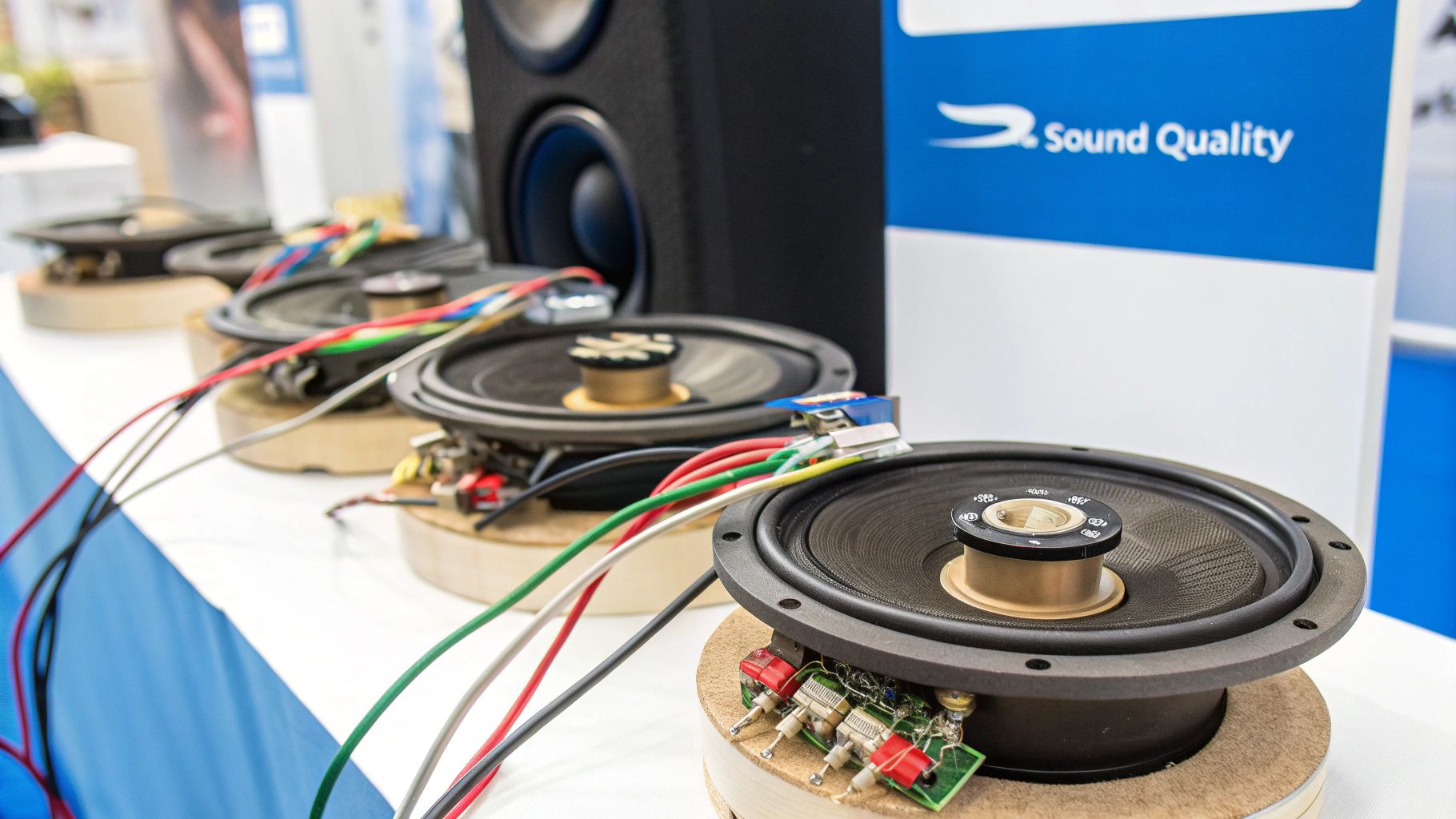
But times have changed. The gap between wired and wireless performance has shrunk dramatically. Modern wireless audio is no longer the flimsy, compromised experience it once was, thanks to some awe-inspiring technology.
The Role of Audio Codecs
The magic behind today’s high quality wireless sound is all in the audio codecs. These are clever algorithms that compress and decompress digital audio data, allowing it to be transmitted wirelessly. While basic Bluetooth relies on standard codecs that can strip away some detail, premium systems utilize far more advanced versions to achieve the desired results.
- aptX HD: This codec is a game changer for Bluetooth, supporting 24-bit music quality. It delivers “better than CD” sound, keeping much of the original recording’s nuance intact.
- LDAC: Developed by Sony, LDAC is even more ambitious. It transmits audio at variable bitrates that can reach up to 990 kbps, which gets you incredibly close to true lossless quality.
- Wi-Fi Streaming: Systems that use Wi-Fi have a massive advantage in bandwidth. This allows them to stream genuinely lossless audio formats without the compression handcuffs that even the best Bluetooth codecs have.
Even with these leaps forward, wireless systems aren’t perfect. Signal interference from other devices hogging your Wi-Fi network or the simple act of data compression can still introduce tiny audio artifacts. You also have to consider real world issues like Bluetooth codec fragmentation and component shortages, which can create hurdles for the market. You can explore the wireless speaker market landscape further to see how these factors play out.
The Audible Difference: So, can you actually hear the difference? For most people listening to streaming services in a typical living room, a high quality wireless speaker will sound absolutely fantastic—so good, in fact, that it’s virtually indistinguishable from a wired one. However, if you’re an audiophile in a dedicated listening room with high resolution audio files, you might still perceive the superior depth and clarity that a wired connection offers. It all comes down to how critically you listen.
4. Navigating Installation and Home Aesthetics
Beyond pure sound quality, the practical aspects of integrating speakers into your home often determine the outcome of the wireless vs. wired debate. This is where the two options couldn’t be more different.
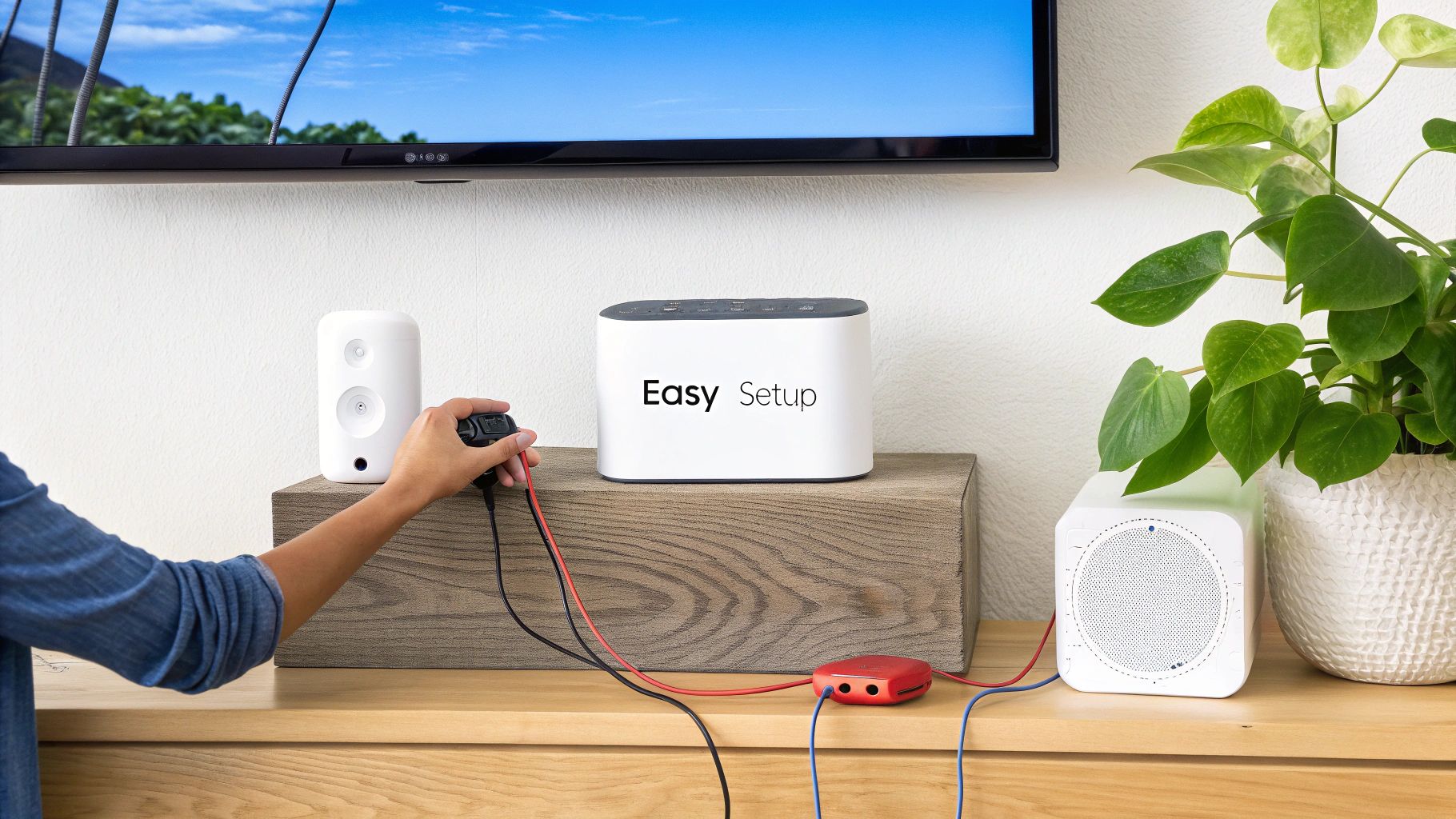
Wireless speakers are all about instant gratification. You can unbox them, plug them into a nearby wall outlet, and have music playing in just minutes. Their plug and play nature makes it incredibly easy to move them between rooms or rearrange your living room on a whim.
But let’s be clear about the term “wireless.” While they don’t need a cable running back to your amplifier, every speaker still needs power. This means you’ll have a power cord for each one, a nearby outlet, and a plan to manage that one visible wire.
Achieving a Clean Look
Wired systems, on the other hand, demand a bit more upfront planning and effort. To achieve a clean, professional finish, you must actively conceal the speaker wires. This could be a rewarding weekend DIY project or something you call in a professional for to make it completely seamless.
- Cable Raceways: These are adhesive-backed channels that stick right onto your baseboards or walls.
Analyzing the True Cost of Your Sound System

When you’re comparing wireless and wired speakers, the sticker price is just the beginning of the story. The real cost depends entirely on what you want to achieve with your audio setup, making a simple side by side comparison almost impossible without the full context.
The cost of a wired system is built piece by piece. You start with the speakers, of course, but then you add the AV receiver to power everything, high-quality speaker wire, and possibly connectors like banana plugs. If you want that clean, professional look, you’ll also be spending on tools, cable raceways, or professional help to hide all those wires, which adds up.
Wireless systems, on the other hand, have a cost that grows with the ecosystem. One smart speaker might seem like a bargain. But to build a full surround sound or multi room audio setup, you’re buying a soundbar, a subwoofer, and several satellite speakers, each with its own built in power and tech. That’s why a high end wireless system can easily become more expensive than a comparable wired one.
Comparing Build Out Scenarios
Let’s put this into terms of two standard setups: a simple 2.1 system (two speakers and a sub) and a more serious home theater.
- Budget 2.1 System: For a basic setup, a wired 2.1 system typically offers more value for your money. You can mix and match components to find the best deals. The wireless equivalent often costs more because of the technology packed into each speaker.
- Premium Home Theater: When you step up to a 5.1 or 7.1 system, the initial cost for wired speakers and a beefy receiver can feel significant. However, a top tier wireless home theater from a premium brand can quickly meet—and often exceed—that price.
Key Insight: The initial sticker price is misleading. A wired system involves component costs and potential installation fees, while a wireless system’s expense grows as you add each powered speaker to your ecosystem.
For a detailed breakdown of what goes into designing and installing different home audio systems, our professional services can provide a more transparent financial roadmap.
Evaluating Smart Features and Connectivity
When you get down to it, the most significant difference between wireless and wired speakers today often boils down to innovative features and modern connectivity. This is where wireless systems truly shine. They aren’t just speakers anymore; they’re intelligent hubs that integrate deeply into your smart home, giving them a defining edge over most traditional wired setups.
With voice assistants like Alexa and Google Assistant, a wireless speaker becomes a central command unit for your entire home. You can ask it to play a specific song, give you a weather update, or even control your smart thermostat and lights, all with a simple voice command. This kind of convenience completely changes how you interact with your home and audio system.
If you’ve ever dreamed of having music flow seamlessly throughout your home, wireless systems make it remarkably easy. Grouping speakers to play the same track in every room or streaming different music in different zones is all managed from a single, intuitive app on your phone.
Key Advantage: While you can add smart functionality to wired systems, it often requires complex and pricey add on components. Wireless speakers, on the other hand, have these features built in right from the start, making them the natural choice for a modern, integrated home.
The massive growth in smart home adoption is what’s really pushing this market forward. In fact, projections show the global wireless speaker market could skyrocket to USD 65.65 billion by 2026, a surge primarily fueled by the demand for voice enabled AI assistants. You can dive deeper into these wireless speaker market trends to see where the industry is headed.
This type of smart integration is a cornerstone of our smart home automation services, where we focus on unifying all your devices to create a truly seamless living experience.
Still Have Questions About Speaker Setups?
Choosing between wireless and wired speakers often boils down to a few key questions. We hear these a lot, so we’ll address the most common concerns to help you make the right decision with confidence.
Can Wireless Speakers Really Match the Sound Quality of Wired Speakers?
For the vast majority of listeners, the answer is a resounding yes. High-end wireless systems from brands like Sonos deliver exceptional sound that’s practically indistinguishable from many wired setups. By using advanced codecs like aptX HD or streaming over a stable Wi-Fi network, they can reproduce rich, detailed audio that will impress even discerning ears.
That said, a dedicated, high resolution wired connection is still the technical champion for pure, uncompressed audio. It eliminates any risk of signal interference or compression, which is why audiophiles often prefer their cables.
Is It Possible to Mix Wired and Wireless Speakers?
Absolutely. Hybrid systems are not only possible, but they’re also incredibly popular and often offer the best of both worlds. It’s a fantastic compromise.
You can easily integrate your prized wired speakers into a modern wireless ecosystem. For example, using a wireless streaming adapter like the Sonos Port lets you connect a traditional stereo system to a whole home wireless network. This gives you the high-fidelity performance you love with the convenience of wireless control.
A Note on “Wireless”: Keep in mind, most so called “wireless” speakers aren’t completely wire free. While the audio signal travels through the air via Wi-Fi or Bluetooth, each speaker still needs to be plugged into a power outlet. Only the smaller, battery powered portable models are truly untethered.
Which System Is Better for Home Theaters?
When it comes to a dedicated home theater where audio and video sync is non negotiable, a wired system remains the most reliable choice. It eliminates the risk of wireless latency or signal dropouts that could ruin a critical movie scene.
While high end wireless home theater systems continue to improve every year, nothing beats the rock solid stability of a wired setup for a truly immersive and flawless cinematic experience.
Ready to create the perfect audio environment in your home? The experts at TV Mounting Houston can design and install a flawless wired, wireless, or hybrid system tailored to your space and budget. Get your free quote today.


