
A Guide to Restaurant Audio Systems
A solid restaurant audio system is so much more than a glorified playlist. It’s one of the most powerful tools you have for shaping the customer experience and driving your brand’s identity home. Get it right, and you’ll see a direct impact on how long guests stick around and how much they spend.
Why Sound Is a Key Ingredient for Your Restaurant
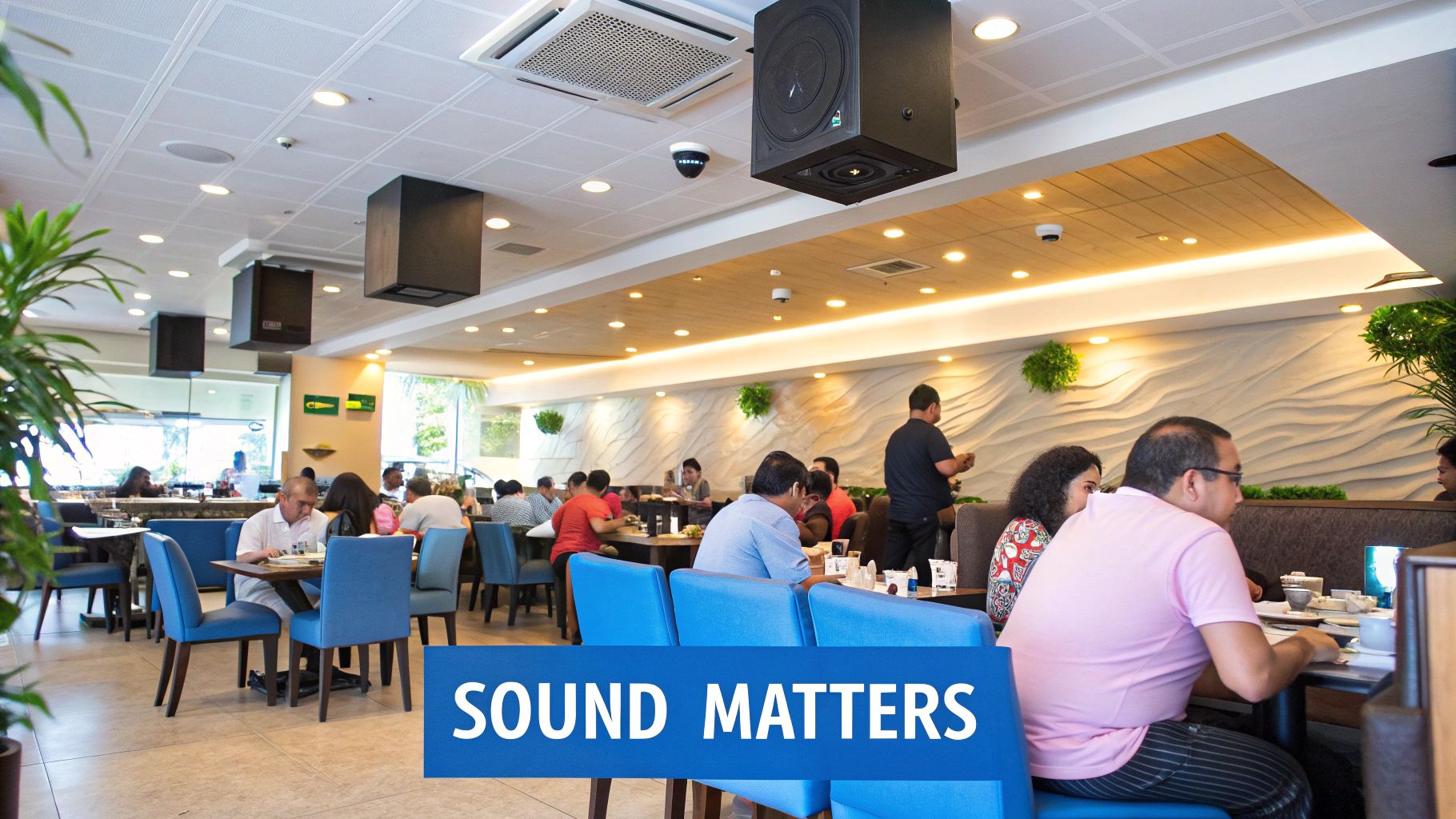
Think of your restaurant’s soundscape like the score of a movie. The right audio quality and music can amp up the energy during a packed dinner rush or create a chill, intimate vibe for a slow afternoon. Just like a bad soundtrack can completely ruin a film, a poor audio system can tank your restaurant’s atmosphere.
A thoughtful audio strategy is about creating a sonic identity that feels authentic to your brand. It’s the difference between a high-energy sports bar and a serene fine-dining spot. A professional setup makes sure that identity comes through loud and clear—but not too loud—in every corner of your space.
The Impact of High-Quality Audio
Investing in a proper audio system isn’t just an expense; it’s a core part of your business strategy that delivers real, tangible benefits that hit your bottom line.
- Elevates the Guest Experience: High-quality sound gets rid of that harsh, tinny noise that makes a space feel cheap. It creates an environment where conversations flow easily and guests feel comfortable.
- Boosts Dwell Time and Spending: It’s been shown time and again that the right tempo and volume can subtly guide customer behavior, encouraging them to stay longer and order that extra drink or dessert.
- Reinforces Brand Identity: The music you play and the clarity with which it’s delivered tells a story about who you are. It’s branding you can hear.
One of the biggest complaints from diners is excessive noise. A staggering 70% of restaurant reviews mention that people have to raise their voices just to have a conversation. A well-designed system gives you the control to make sure your music enhances the mood without adding to the problem.
At the end of the day, a professional restaurant audio system gives you the control you need to craft the perfect ambiance. It’s what makes every visit more memorable and, ultimately, more profitable.
How to Plan Your Restaurant’s Soundscape
Before you even think about picking out a speaker, the first step is to create a blueprint for your sound. A solid plan for your restaurant audio system is your best defense against costly mistakes, ensuring the final result perfectly captures your brand’s atmosphere. You have to start by defining your sonic identity.
Are you running an energetic sports bar where the game commentary and music need to be crisp, punchy, and clear? Or are you a quiet, cozy bistro where the audio should be a subtle, immersive background layer that never gets in the way of conversation? Nailing down this answer will guide every single decision you make from here on out.
Getting this right is more important than ever. The professional audio system market was valued at USD 5.6 billion in 2024 and is expected to climb to USD 9.8 billion by 2033, largely because restaurants and bars are recognizing the power of a great ambient experience. You can read more about the growth of professional audio systems on verifiedmarketreports.com.
Define Your Audio Zones
Most restaurants aren’t just one big, uniform space. They’re a collection of unique environments, each with its own purpose. Mapping out distinct audio zones is absolutely essential for creating the right vibe in each area. This means you can control the volume and the playlist independently for different parts of your establishment.
Common audio zones you’ll want to consider include:
- The Main Dining Room: This area usually needs even, low-to-mid volume coverage that encourages conversation, not overpowers it.
- The Bar Area: This spot typically benefits from more energetic music at a slightly higher volume to create a lively, social hub.
- Outdoor Patios: Here, you’ll need weatherproof speakers and a volume level that’s respectful to your neighbors.
- Restrooms and Hallways: A touch of subtle, low-volume background music ensures a seamless audio experience as guests move through your space.
A common mistake is treating the entire restaurant as a single zone. Independent control lets you crank up the music at the bar for happy hour without overwhelming diners who are trying to enjoy a quiet meal just a few feet away.
Consider Your Technical Needs
Finally, let’s get practical. Think about the nitty-gritty requirements of your operation. Will you need a microphone input for hosting events or making announcements? Will your managers need a simple, easy-to-use interface to control the system from a tablet or smartphone?
Proper planning also means thinking about the physical installation, like how to run wires discreetly through walls and ceilings. Factoring in needs like professional network cabling installation early in the process ensures you end up with a clean, reliable, and future-proof setup.
Choosing the Right Audio System Components
With your audio blueprint finalized, it’s time to pick the gear that brings your restaurant’s soundscape to life. Think of your audio system like a band—every component has a role, and they all need to play in perfect harmony. Getting the hardware right from the start is the key to delivering reliable, high-quality sound day in and day out.
Amplifiers, Speakers, and Mixers: The Core Trio
At the center of it all is the amplifier. Just like a heart pumps blood through the body, an amp takes the weak audio signal from your music source and boosts it with enough power to drive the speakers. Commercial-grade amplifiers are built to run continuously, making them a non-negotiable part of any serious restaurant audio system.
Then you have the speakers, which are the voice of your system. The right choice here depends entirely on your restaurant’s layout, design, and what you’re trying to achieve with your sound. You wouldn’t use the same speakers in an intimate dining room as you would on a bustling patio, after all.
- In-Ceiling Speakers: These are your most discreet option. They blend right into the ceiling, giving you a clean, almost invisible look while providing even, low-level background music. Perfect for main dining areas.
- Surface-Mount Speakers: Mounted onto walls or columns, these are more visible but give you directional sound. They’re great for targeting specific zones like a bar or lounge where you want a bit more focused energy.
The goal is to create a consistent audio experience everywhere, eliminating “hot spots” where the music is too loud and “dead zones” where it’s barely audible. Proper speaker choice and placement are key.
Finally, a mixer acts as the brain of the operation. It lets you combine and control different audio inputs, like your background music source and a microphone for announcements. Many modern systems now bundle the mixer and amplifier into a single, user-friendly unit to keep things simple for your staff.
To help you get started, here’s a quick look at the essential components.
Essential Components for Your Restaurant Audio System
This table breaks down the core hardware, its function, and what you should look for when choosing pieces for a demanding commercial environment.
| Component | Primary Function | Key Considerations for Restaurants |
|---|---|---|
| Amplifier | Boosts audio signals to power speakers. | Must be commercial-grade for 24/7 operation and have enough power for all planned speakers. |
| Speakers | Convert electrical signals into sound. | Choose between in-ceiling for discretion or surface-mount for directional audio. Weather-resistant models are needed for patios. |
| Mixer | Blends and controls multiple audio inputs. | Look for user-friendly interfaces for staff and enough inputs for all your sources (music, mics, TVs). |
| Audio Source | Provides the music or audio content. | Dedicated business streaming services are recommended for proper licensing. Can be a tablet, satellite radio, or dedicated player. |
| Cabling | Connects all components together. | Use high-quality, commercial-grade speaker wire to ensure signal integrity and safety compliance. |
Putting these pieces together correctly ensures your system is not only effective but also durable and easy for your team to manage.
Tying It All Together with Modern Controls
Your audio sources—whether it’s a dedicated streaming service for businesses, satellite radio, or even a tablet—are what feed the music into your system. Thanks to innovations trickling down from the consumer world, commercial setups are more flexible than ever. The consumer audio market, valued at $85.37 billion in 2024, has pushed advancements like wireless streaming and multi-zone control into the mainstream. You can learn more about consumer audio trends on consegicbusinessintelligence.com.
This allows for sophisticated setups where you can create custom audio zones for different areas of your restaurant, as shown below.
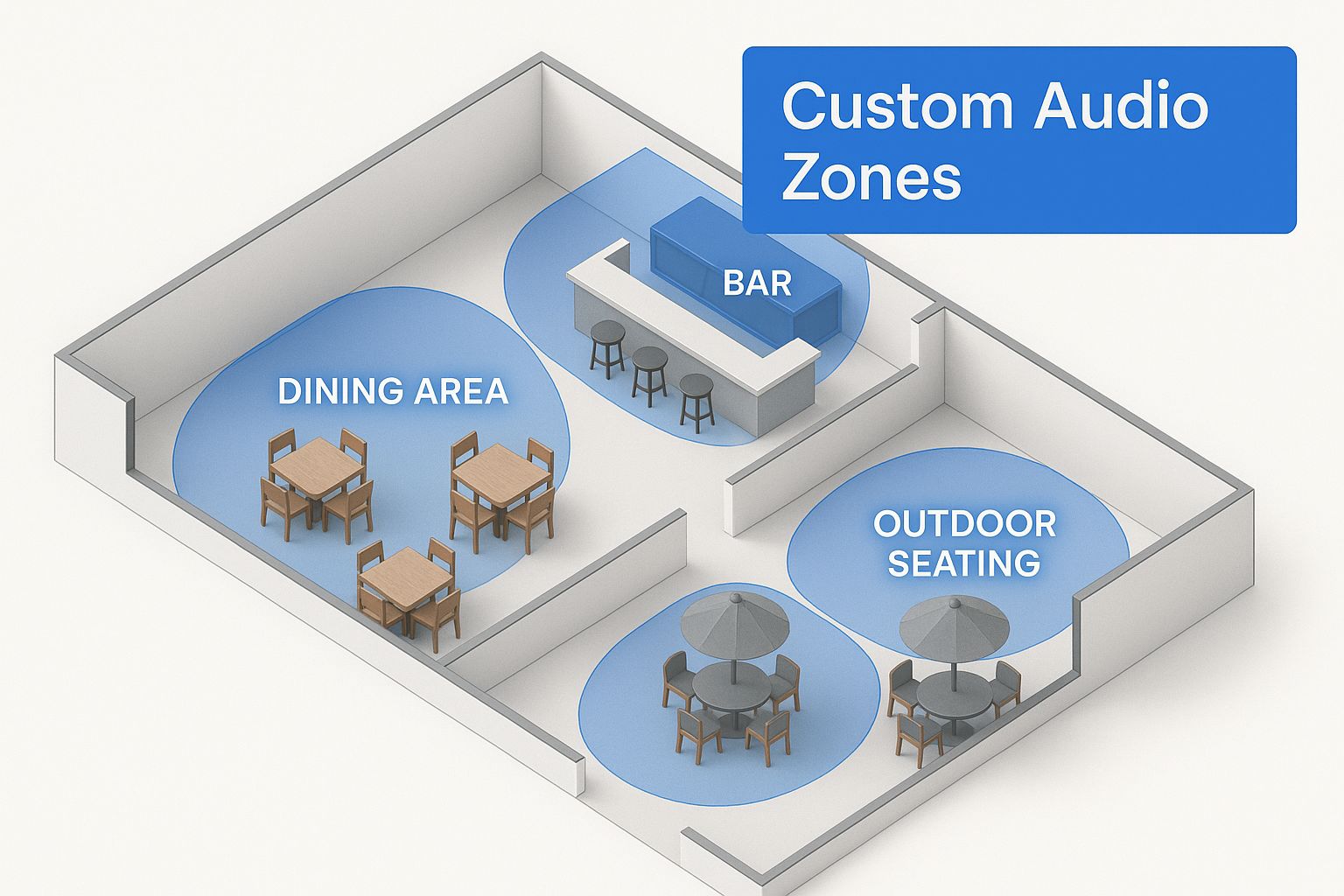
This level of multi-zone control gives you the power to tailor the atmosphere perfectly to each space—maybe mellow jazz in the dining room and something more upbeat at the bar. To achieve this kind of seamless integration in your own establishment, you might find our guide on home and commercial audio systems helpful.
Designing Your Speaker Layout for Perfect Coverage
Having top-tier speakers is a great start, but it’s only half the job. Their placement is what truly transforms a pile of hardware into an immersive soundscape that feels just right. Think of speaker layout like painting with sound—the goal is to apply an even, consistent coat across your entire restaurant, making sure no spot is left bare or, worse, completely oversaturated.
This is all about getting rid of those annoying “hot spots” where the music is way too loud and the dreaded “dead zones” where it just disappears. A poorly planned system often forces your staff to crank up the volume just to reach the far corners, which then blasts the guests sitting too close to a speaker. A well-designed layout for your restaurant audio system, on the other hand, delivers a comfortable, consistent listening level for everyone, no matter where they’re seated.
Matching Speaker Density to the Space
Different areas of your restaurant have completely different audio needs. You can’t just scatter the same speakers everywhere and hope for the best. The real key is to match the speaker type and density to how each zone is used.
For instance, a main dining room usually benefits from a higher density of smaller, less powerful speakers, like in-ceiling models. This approach creates a seamless blanket of background music that’s always present but never gets in the way of conversation.
A lively bar area, on the other hand, might need fewer, more powerful surface-mount speakers. These can be aimed to concentrate more energy and volume into that specific zone without letting the sound bleed over into quieter dining spaces.
The ultimate goal of a professional speaker layout is to achieve balanced, full-range sound at a low volume. When the sound is distributed evenly, you don’t need to turn it up to feel its presence.
Integrating Sound with Your Decor
Finally, your audio system should feel like a natural part of your restaurant’s aesthetic, not a clunky, technical afterthought. A thoughtful installation ensures the technology enhances the environment without sticking out like a sore thumb.
Keep these aesthetic tips in mind for a seamless look:
- In-Ceiling Speakers: These are fantastic because they can be painted to match your ceiling color, making them practically invisible to the eye.
- Surface-Mount Speakers: Look for models with colors and shapes that complement your decor. They can be neatly tucked into corners or placed beside lighting fixtures to blend right in.
- Subwoofers: If you need that extra low-end punch, subwoofers can often be hidden inside custom cabinetry or underneath banquette seating to provide rich bass without any visual clutter.
By planning your speaker placement with both acoustics and aesthetics in mind from the start, you create an experience where the sound elevates the atmosphere without ever being a visual distraction.
Best Practices for Installation and Setup
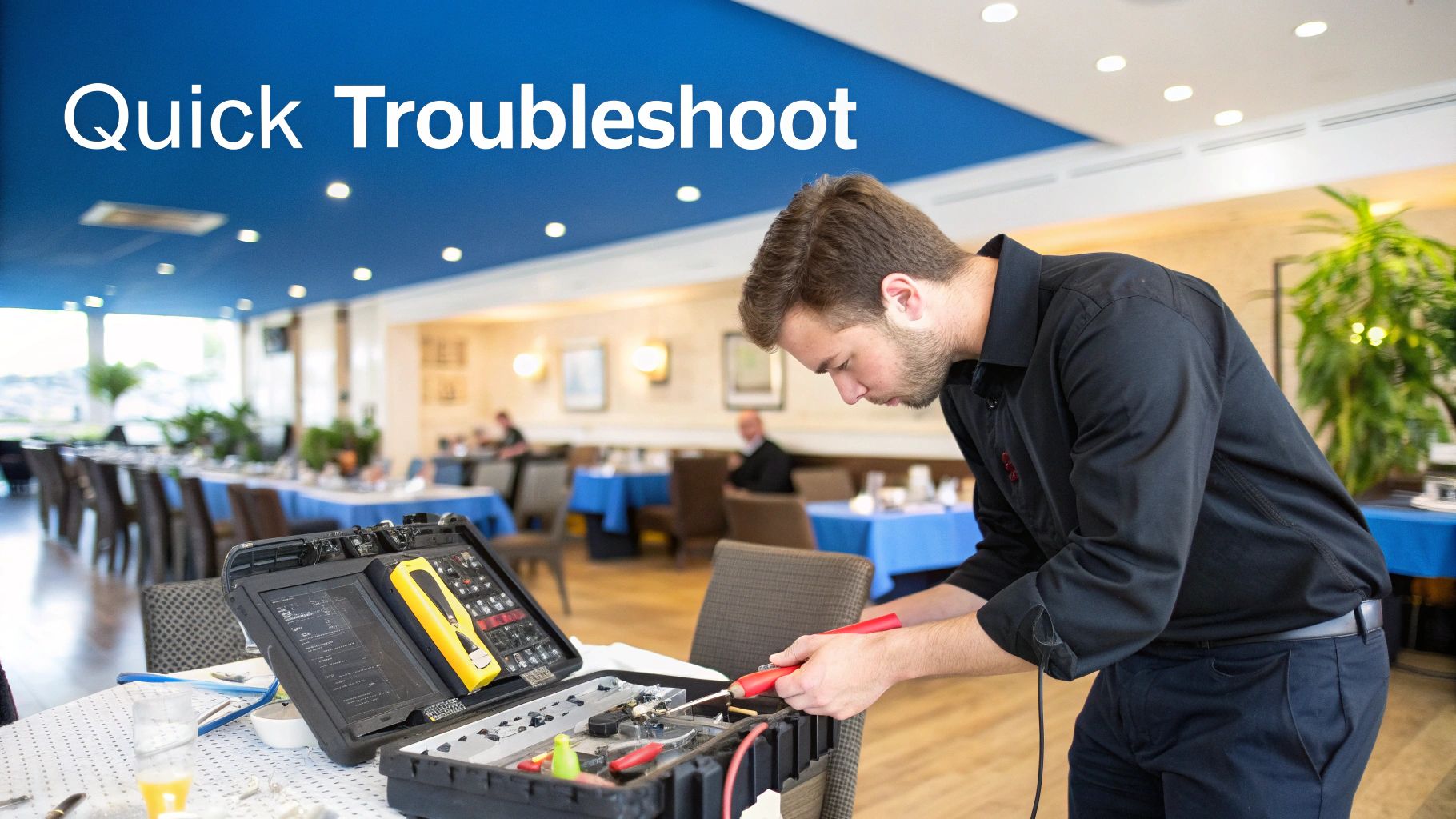
This is the fun part—where all that careful planning comes to life. Whether you’re bringing in a professional crew or tackling the install yourself, sticking to best practices is non-negotiable. Getting it right ensures your restaurant audio system is safe, reliable, and sounds incredible from day one.
Proper wiring is the backbone of any solid audio system. Always spring for commercial-grade, plenum-rated cables if you’re running wires through ceilings or air ducts, as required by most local building codes. And when you’re mounting speakers, make absolutely sure they’re fastened to a structural element like a stud or joist, not just drywall. The last thing you want is a speaker taking a tumble.
Don’t forget about your amplifier! These devices are the engine of your system, and they generate a good amount of heat. One of the quickest ways to kill your equipment is by letting it overheat. Place your amp somewhere with plenty of airflow, far away from any cramped, stuffy cabinets.
Tuning Your System for a Perfect Balance
Once everything is plugged in and powered on, the final, crucial step is tuning the system to your space. This is much more than just hitting the “on” switch; it’s an art form, fine-tuning the audio to craft that perfect atmosphere you envisioned.
Your initial setup should focus on a few key adjustments:
- Balance Zone Volumes: Go through and adjust the volume for each zone one by one. The bar might need a bit more energy, while the main dining room should be at a level that encourages conversation. And the patio? You want the music to be present, but not so loud it spills out into the street.
- Set the Equalizer (EQ): No two rooms sound the same. Use the EQ settings to tame any harsh high frequencies or clean up muddy-sounding bass. The goal is to get crisp, clear audio that sounds great at any volume.
- Configure Audio Sources: Run a test of all your inputs. Make sure the background music player, TVs, and any microphones all have consistent, manageable levels so your staff can switch between them without any jarring volume jumps.
The global sound system market was valued at USD 25 billion in 2023, and it’s growing fast. Why? Because businesses understand that customers now expect high-quality, immersive audio experiences. A professional setup ensures your investment pays off by delivering the exact atmosphere people are looking for. Learn more about the expanding sound system market on dataintelo.com.
For really complex setups with multiple audio zones and integrated video, the core principles are very similar to what we do in high-end residential projects. You can actually get some great insights from our guide on professional home theater installation to better understand how to create truly immersive sound environments.
Your Top Questions About Restaurant Audio Systems, Answered
Jumping into a professional sound system for your restaurant naturally brings up a few questions. It’s easy to get tangled up in the details of budget, technology, and what features really matter. Getting straight answers is the key to making a confident decision that perfectly suits your restaurant’s unique vibe.
Let’s walk through some of the most common questions we hear from restaurant owners planning their audio setup.
How Much Should I Budget for a Professional System?
There’s a pretty wide range here. A small, cozy cafe might be looking at around $2,000, while a large restaurant with multiple dining areas and high-end gear could easily invest $20,000 or more. The final price tag really boils down to a few key factors.
Here’s what moves the needle on cost:
- The size of your space: Simply put, more square footage requires more equipment to cover it evenly.
- The number of audio zones: Do you need different music or volume levels in the dining room, bar, and patio? Each zone adds to the complexity.
- The quality of the components: The speakers, amplifiers, and controllers you choose will have a big impact on both the sound and the cost.
- Professional installation: Getting it wired safely and tuned for your specific space by a pro is a crucial part of the investment.
Think of it less as an expense and more as a core investment in your restaurant’s atmosphere, just as important as your lighting or seating.
Can I Just Use Consumer Speakers Like Sonos?
While systems like Sonos are fantastic for home use, they just aren’t built to handle the grind of a commercial setting. Trying to make them work in your restaurant is often a recipe for reliability headaches down the road. Professional-grade equipment, often called a 70-volt system, is engineered specifically for this kind of work.
Commercial systems are designed to run all day, every day, and they allow for much more efficient wiring over the long distances you find in a restaurant. They’re built tougher and deliver the kind of consistent, polished sound coverage you need.
Another huge plus for commercial systems is security. It keeps curious guests from connecting their own phones to your speakers via Wi-Fi and hijacking your playlist—a surprisingly common issue with consumer gear. For durability, scalability, and a truly professional result, a commercial system is always the right call.
What Is Audio Zoning and Why Do I Need It?
Audio zoning is one of the most powerful tools a professional sound system gives you. It’s the ability to control the music and volume independently in different areas of your restaurant, all from one central spot.
Imagine this: You can have quiet, ambient music playing in the main dining room, a more upbeat playlist going at the bar, and a completely different vibe on the patio. That level of control is essential for crafting the perfect atmosphere for each distinct space. It guarantees a better, more tailored experience for every single guest, no matter where they’re seated.
Do I Really Need a Subwoofer in My Restaurant?
Whether or not you need a subwoofer really comes down to the kind of atmosphere you’re trying to build. For most restaurants where the music is meant to be pleasant background ambiance, a sub isn’t strictly necessary. But it can make a world of difference in the overall quality.
A well-placed subwoofer adds warmth and depth, creating a richer, fuller sound that doesn’t require you to crank up the volume. The music can be felt as much as it’s heard, in a good way. For places with more energy—like a bustling bar, a lounge, or a cafe that might host live music—a subwoofer becomes almost essential for delivering that complete, engaging audio experience. The trick is to balance it so it enhances the mood without drowning out conversation.
Ready to create the perfect soundscape for your establishment? TV Mounting Houston offers expert design and installation for commercial audio systems tailored to your specific needs. Get a free quote today and let our certified technicians build the ideal audio experience for your guests!


