
Your Guide to a TV Mounted in Bedroom Setup
Putting a TV in your bedroom can turn it into the ultimate private retreat. But getting it right is about more than just finding a spot on the wall. The real secret to a great setup is a little bit of planning, focusing on a comfortable viewing angle, a rock-solid installation, and a clean, wire-free look.
Let’s walk through how to get that professional finish without the usual DIY headaches.
Designing Your Perfect Bedroom Viewing Space
The idea of a cozy bedroom viewing space is fantastic, but it’s easy to get wrong. The goal is to create something that helps you relax, not a setup that gives you a sore neck or adds a bunch of visual clutter. A tv mounted in bedroom project needs to be thought of differently than a living room one, balancing how it feels with how it looks.
Before you even think about touching a drill, ask yourself a simple question: how do you actually watch TV in bed? Are you propped up on a mountain of pillows, or are you usually lying down? Your answer completely changes where the TV should go.
The most common mistake I see is mounting a bedroom TV at living room height. In the bedroom, you’re almost always looking up from a reclined position. This means the TV needs to go higher on the wall than you probably think.
Key Planning Considerations
Thinking through these points first will save you a ton of hassle later on. A well-planned installation looks like it was always meant to be there.
- Your Viewing Spot: Where will you be? The height and tilt of the screen should be based on your eye level from that specific spot, whether you’re sitting up or lying flat.
- The Room Itself: Take a look at your room’s layout. Where are the windows? Mounting a TV directly across from a bright window is a recipe for annoying glare. You also need to find a wall with solid studs that works for your viewing angle.
- Style and Aesthetics: A giant black screen can really dominate a peaceful bedroom. Think about how to make it blend in. Frame TVs that look like art are a great option, but even just hiding the cables makes a massive difference in creating a clean, calming space.
Ultimately, this is all about finding that sweet spot between comfort, safety, and style. Taking a few minutes to visualize the end result helps ensure your TV is a relaxing escape, not a nagging eyesore. A little forethought now means you won’t be patching holes in the wall later.
Finding the Right TV Mount and Position
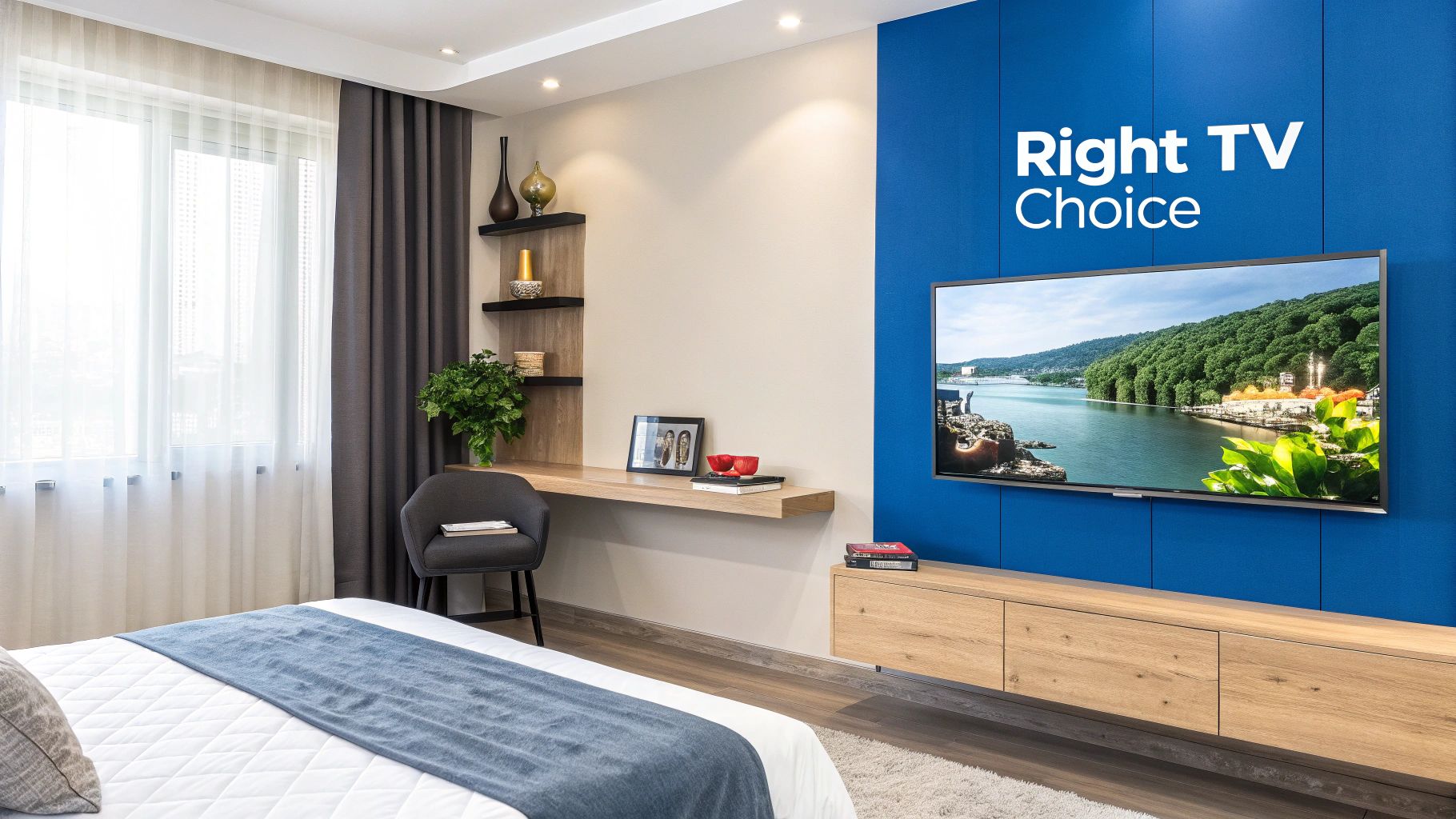
This is where the magic happens—or where things can go wrong. Picking the right hardware and the perfect spot for your TV is the most critical part of the entire project. Mounting a TV in the bedroom is a completely different ballgame than setting one up in the living room. Here, your primary viewing position is lying down, and that changes everything.
Think about your room’s specific quirks. Is the only good wall directly across from a window? You’re going to be fighting glare all day. In a situation like that, a simple tilting mount becomes a lifesaver. It lets you angle the screen down just enough to kill those pesky reflections, saving you from a major room renovation.
Or maybe you’re stuck with an awkward corner as your only option. Don’t sweat it. This is the perfect job for a full-motion (or articulating) mount. These mounts let you pull the TV away from the wall and swivel it into the perfect position. It’s the ultimate problem-solver, turning a tricky space into a prime viewing spot.
Finding That Sweet Spot for Viewing Height
The single biggest mistake I see is mounting a bedroom TV way too high, almost like a piece of art. This is a one-way ticket to neck cramps and just a genuinely uncomfortable viewing experience. Ditch the generic advice you find online and do this instead.
Grab a tape measure and a friend (or a patient family member). Get into bed and lie down just as you would to watch a movie. Have your helper hold a piece of cardboard or even just their hands up on the wall where the TV will go. Move it around until your eyes land comfortably on the center of that “screen” without having to crane your neck. That’s it. That’s your ideal height.
A high TV over a fireplace in a bedroom is actually a good thing. When you are lying down on a bed you need to make sure that you can see over your feet. So in a bedroom, you actually want your TV higher so you can watch while lying down.
This little trick takes five minutes but guarantees your final placement is built for your comfort, not some random number from a manual. It’s the difference between a setup you’ll love for years and one that’s a constant annoyance.
With more people bringing bigger screens into the bedroom, getting this right is even more important. The 4K TV market, currently valued around USD 100 billion, is projected to hit USD 180 billion by 2030. The most popular size bracket, the 55-65 inch range, is often perfect for bedrooms, offering an immersive picture that doesn’t overwhelm the space. You can read the full research about 4K TV market trends to see how technology is shaping these choices.
Comparing TV Mount Types for Bedroom Use
To help you choose the right tool for the job, here’s a quick comparison of the most common mount styles and how they stack up for bedroom use.
| Mount Type | Best For | Pros | Cons |
|---|---|---|---|
| Fixed | Budget-conscious setups with a perfectly aligned viewing spot. | Sits closest to the wall for a slim profile; most affordable. | No adjustments for glare or angle; unforgiving placement. |
| Tilting | Bedrooms with windows opposite the TV or higher mounting needs. | Allows vertical tilt to reduce glare and improve angle. | No side-to-side swivel; limited horizontal adjustment. |
| Full-Motion | Rooms with awkward corners or multiple viewing spots. | Maximum flexibility with tilt, swivel, and extension. | Sits furthest from the wall; can be more expensive. |
Each type has its place. A fixed mount is great if you have the perfect spot lined up, but a tilting or full-motion mount offers the flexibility to solve common bedroom challenges like glare and odd angles.
A Practical Guide to TV Installation
https://www.youtube.com/embed/06b-W0nW2mA
You’ve got your mount picked out and the perfect spot on the wall measured. Now for the hands-on part. Don’t let it intimidate you—with a bit of care and a few tricks I’ve learned over the years, you’ll get your tv mounted in bedroom safely and perfectly level.
The absolute first thing you must do is find the wall studs. I can’t stress this enough. Your drywall isn’t going to hold the weight of a modern TV, no matter how light it seems. The mount has to be anchored directly into the solid wood frame of your wall. It’s a non-negotiable for safety.
A simple stud finder is your best friend here. Just slide it along the wall until it lights up or beeps. A little pro tip: find both edges of the stud and mark the dead center. This gives you the most secure anchor point possible for the hefty lag bolts that hold everything together.
Precision and Preparation Matter
Once you’ve located your studs, hold the wall plate of your mount up and use a level to get it perfectly straight. This is where you’ll mark where to drill your pilot holes. It’s a step that’s tempting to skip, but trust me, it’s critical.
Pre-drilling these holes makes driving in the lag bolts so much easier. More importantly, it stops the wood stud from splitting under pressure, which would completely compromise the strength of your setup. Your pilot hole should be just a little bit smaller in diameter than the lag bolt itself—this ensures a really tight, secure grip.
Always double-check your measurements and put the level on your marks one last time before you drill. It’s a lot easier to erase a pencil mark than it is to patch an extra hole in your bedroom wall.
With the pilot holes ready, you can attach the mounting plate. A socket wrench is the right tool for the job. Drive the lag bolts in until they’re snug, but be careful not to overtighten them. Cranking them down too hard can actually damage the wall or strip the wood inside the stud. The goal is a plate that sits completely flush and doesn’t move at all.
This image breaks down the core installation process into three clear steps.
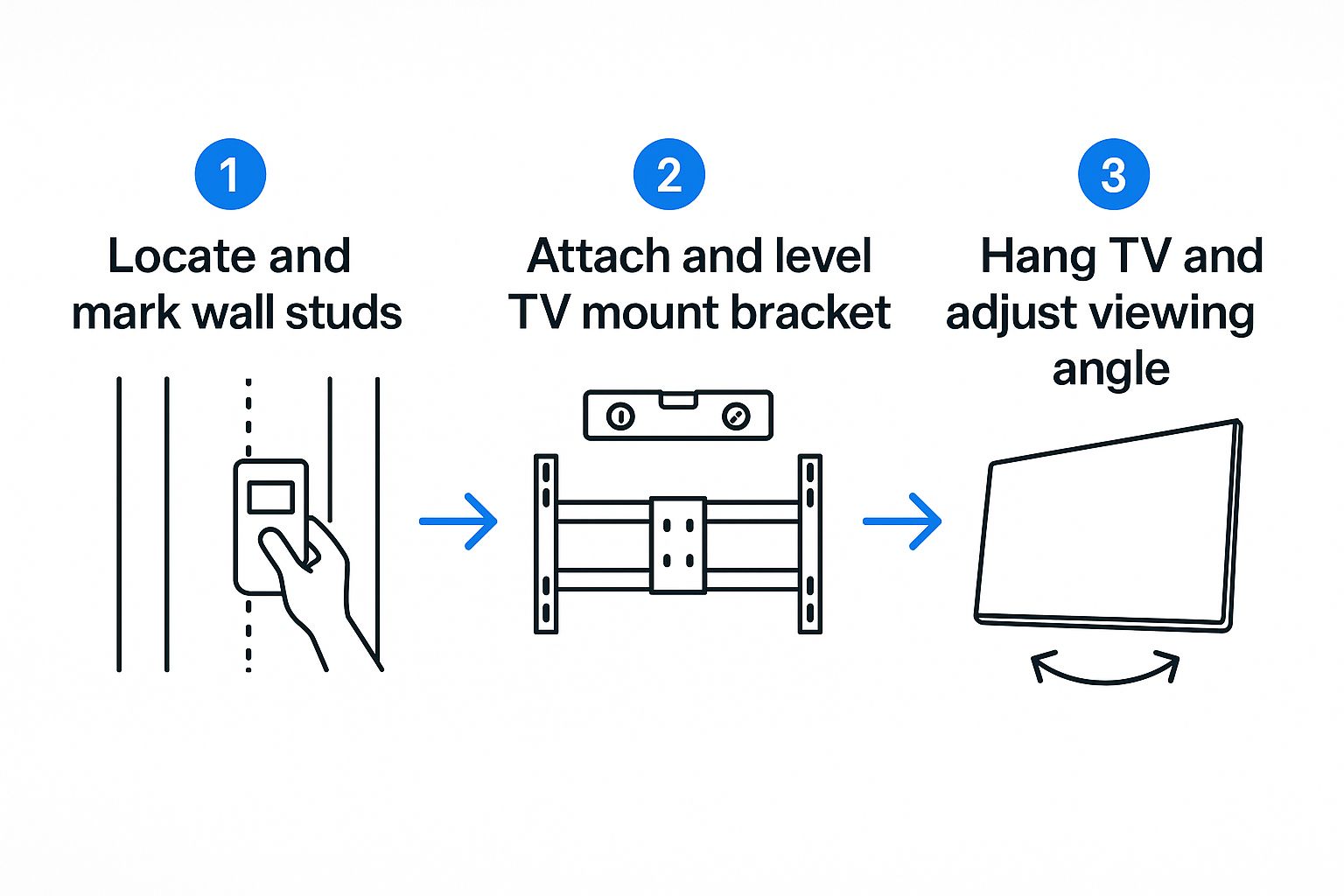
As you can see, it’s a logical flow. You start by finding the wall’s structure, then you level the hardware, and finally, you hang the TV. Each step builds a secure foundation for the next.
Attaching and Securing Your TV
Alright, now let’s get the TV ready. Carefully lay it screen-down on something soft, like a blanket or the box it came in. You’ll see the four VESA mounting holes on the back. This is where you’ll attach the vertical brackets from your mount kit.
Your kit probably came with a bag full of screws and spacers of different sizes. Check your TV’s manual to see exactly which screw length you need. Using one that’s too long can seriously damage the expensive electronics inside the screen. Hand-tighten the screws to get the brackets on there nice and firm.
The desire for a cozy, integrated entertainment space is a huge trend. The global television market is projected to grow at a CAGR of 3.10% over the next decade, swelling to a market size of about USD 128.65 billion. This isn’t just about living rooms anymore; it reflects how much we value personalized entertainment right in our own bedrooms. You can discover more insights about television market trends on expertmarketresearch.com if you’re curious about the data.
This is a two-person job. Grab a helper and carefully lift the TV, hooking the brackets onto the wall plate. Most mounts will give you a satisfying “click” to let you know the TV is locked in place. This is your final safety confirmation.
Gently give the TV a little wiggle from the sides and bottom to make sure it’s completely stable. Once you’re confident it’s not going anywhere, you can make those last-minute tweaks, like adjusting the tilt for the perfect viewing angle from bed. Now you can step back and enjoy your work.
How to Conceal TV Wires for a Flawless Look
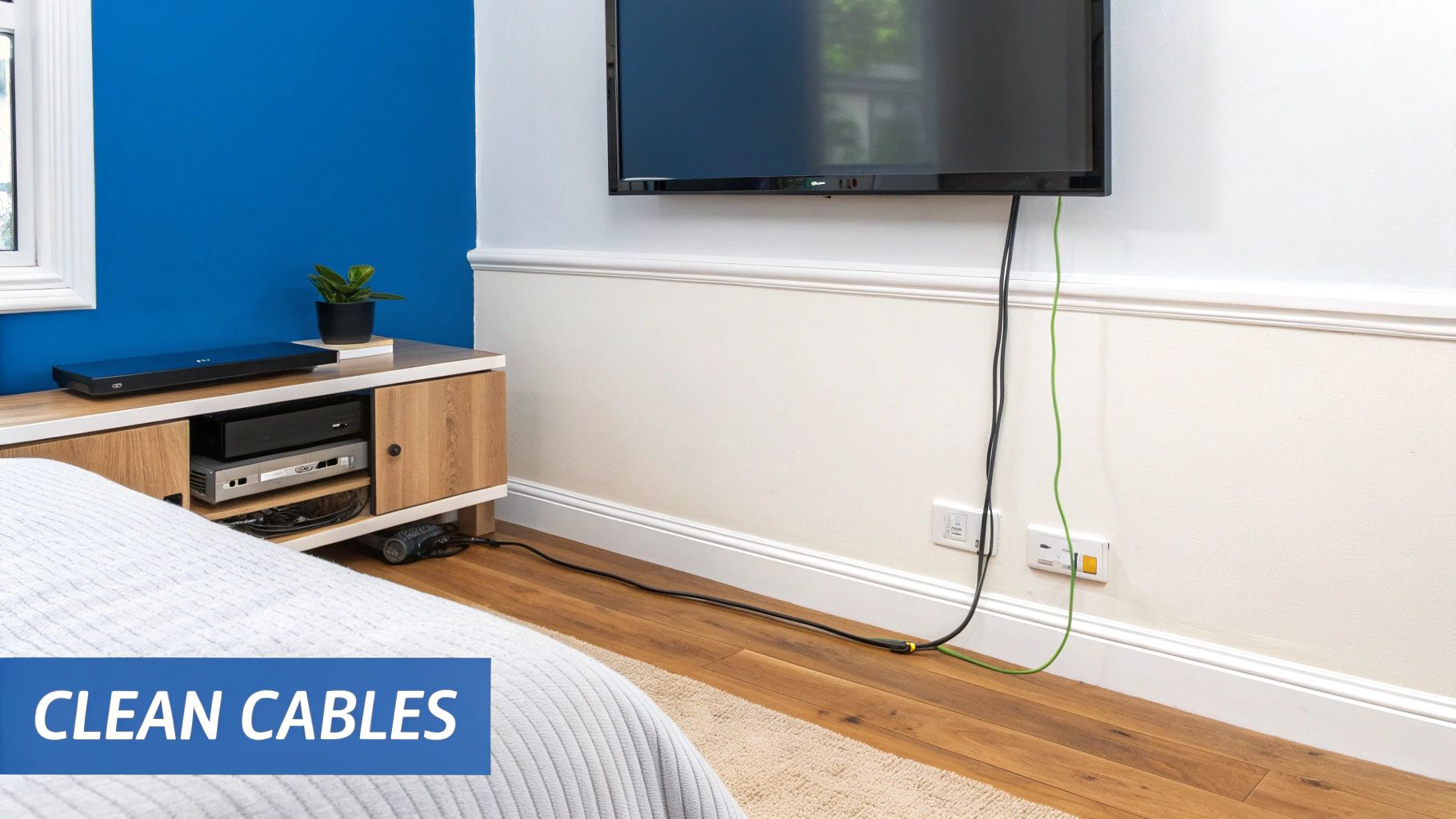
You’ve done all the hard work. The TV is mounted safely, and you nailed the perfect viewing height. But now it’s time for the final detail—the one that really separates a pro-level installation from an average one. I’m talking about making those messy cables vanish.
There’s nothing that ruins the clean, floating look of a mounted TV quite like a waterfall of black wires dangling down the wall. It just kills the vibe.
Thankfully, you’ve got a few great options to get that polished, clutter-free finish. The best method for you really boils down to your budget, how handy you are with a few tools, and whether you rent or own your place. Let’s walk through the most popular ways to hide those wires.
On-Wall Cord Concealers: The Simple Solution
If you want a fast, easy, and renter-friendly fix, look no further than on-wall cord concealers. You’ve probably seen these before—they’re simple plastic channels that stick right onto your wall. You just tuck the cables inside, snap the cover shut, and you’re done.
The real magic is that most of these kits are paintable. Slap a quick coat of your wall color on the concealer (or “raceway,” as they’re also called), and it practically disappears. It’s a fantastic, low-commitment solution that delivers a massive visual upgrade.
- Best For: Renters, homeowners who want a quick win, and anyone who isn’t keen on cutting into their drywall.
- Tools Needed: Just a small handsaw or a sharp utility knife to cut the channel to the right length, plus a tape measure.
- Pro Tip: Before you peel off the adhesive backing, plan the path from the TV to the outlet. Use a level to make sure the raceway will be perfectly straight—it makes a huge difference.
Honestly, this whole process can take less than 30 minutes and is perfect for any skill level.
Don’t underestimate the power of a simple raceway. For many bedroom setups, especially where the TV is mounted directly above a dresser or console table, a painted on-wall concealer provides a 90% solution for 10% of the effort.
In-Wall Cable Hiding Kits: The Professional Finish
For that truly seamless, “how’d they do that?” look, hiding the wires inside the wall is the way to go. I know it sounds daunting, but modern in-wall cable management kits have made this project surprisingly manageable for the average homeowner.
These kits typically come with two main parts—a top port that goes behind the TV and a bottom port near your outlet. They are connected by a special power cable that is safety-rated to be run inside a wall. You simply cut two holes in the drywall, fish your HDMI and other cables down, and plug everything in. The result? Zero visible wires.
Now, this part is critically important: you must use a kit specifically designed for this. Never, ever just run your TV’s standard power cord inside the wall. It’s a serious fire hazard and a major violation of electrical codes. The proper kits are built to meet safety standards and give you peace of mind.
So, which approach is right for your bedroom?
| Feature | On-Wall Raceways | In-Wall Kits |
|---|---|---|
| Effort Level | Low | Medium |
| Tools Required | Minimal (saw, tape measure) | Drywall saw, drill, stud finder |
| Best For | Renters, quick projects | Homeowners, clean aesthetic |
| Permanence | Low (removable) | High (requires patching if removed) |
Whichever path you choose, hiding those cables is the final step that elevates your mounted TV from just being an appliance to being a sleek, intentional part of your bedroom’s design.
Integrating Your TV into a Smart Bedroom
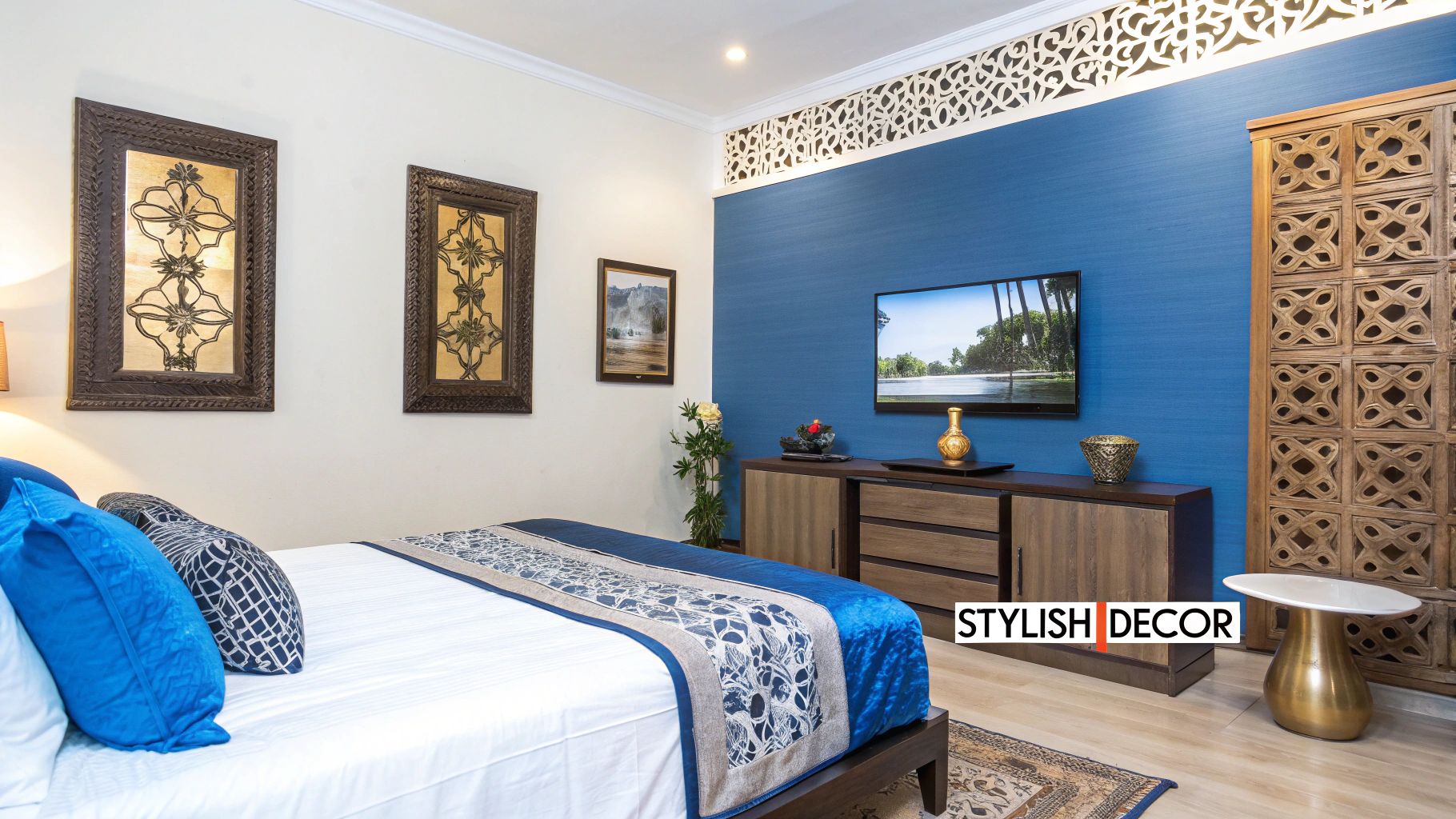
Getting your TV mounted in the bedroom is a great start, but the real magic happens when you turn it into the brain of a connected, modern sanctuary. It’s not just about hanging a screen on the wall; it’s about making it the centerpiece of a smart ecosystem that actually makes your life easier and more relaxing.
One of the easiest first steps? Add a soundbar. Let’s be honest, the built-in speakers on even the best TVs are usually just okay. A slim soundbar mounted right under the screen delivers that rich, immersive audio you want for late-night movies without cluttering up your dresser. This keeps the whole setup looking clean and intentional.
Building a Cohesive Smart Ecosystem
True integration is all about getting your devices to talk to each other. This is where you can have some real fun with voice assistants and smart plugs, turning your bedroom into a space that responds to you.
Hooking your TV up to a voice assistant like Amazon Alexa or Google Assistant is a game-changer. No more hunting for the remote in the dark. You can just say, “Turn on the TV,” and it happens. This simple command can also be part of a larger routine—dimming your smart lights and adjusting the thermostat all at once to create the perfect viewing environment.
Smart plugs add another fantastic layer of control and automation. They’re simple, cheap, and surprisingly useful.
- Automated Shutdown: Plug your TV and soundbar into a smart plug and schedule them to power off completely at a certain time. No more glowing standby lights ruining your sleep.
- Energy Management: Curious how much power your setup is using? The smart plug’s app can show you, helping you keep an eye on consumption.
- Remote Control: Ever leave the house and have that nagging feeling you left the TV on? A quick tap in an app can shut it down from anywhere.
By linking these elements, you create a smart bedroom that anticipates your needs. It’s about more than just convenience; it’s about crafting a space that actively contributes to your comfort and relaxation at the end of a long day.
While global TV shipments are expected to hold steady at around 208.7 million units, it’s interesting to see where the growth is. In North America, shipments are projected to climb by 1.6%, largely because people are specifically looking for TVs with great smart features built right in. You can learn more about global TV shipment trends on Omdia’s site. This trend really shows that for spaces like the bedroom, we no longer just want a screen—we want a fully connected hub for our entertainment.
Common Questions About Bedroom TV Mounting
Even after you’ve got a plan, it’s totally normal to have a few last-minute questions about getting a tv mounted in bedroom. I get it. Let’s walk through some of the most common ones I hear from people, so you can feel confident you’re doing this right.
One of the biggest hang-ups is always height. It’s not quite the same as mounting a TV in the living room, simply because you’ll be watching from bed.
What Is the Best Height for a Bedroom TV?
The golden rule here is simple: mount the screen at eye level from where you’ll actually be watching—which is probably propped up with pillows or lying down. A good starting point is to aim for the center of the screen to be about 42-48 inches from the floor. But think of that as a suggestion, not a hard-and-fast rule.
Honestly, the best way to nail the height is to get in bed, relax into your favorite viewing position, and have someone measure from the floor to your eye level. That’s your sweet spot.
What if you have to mount it higher to clear a dresser? No problem. This is exactly what a tilting mount was made for. It lets you angle the screen downward, which is a lifesaver for avoiding neck cramps and getting a great picture.
I actually find that a slightly higher TV works better in a bedroom. When you’re lying down, you’re looking up and over your feet. Placing the TV a bit higher on the wall gives you a clear line of sight without having to crane your neck.
Can I Mount a TV on Drywall Without Studs?
This question comes up all the time, and the answer is a hard no. I can’t stress this enough: drywall alone is not designed to hold the weight of a TV. Even lightweight models create a pulling force that will eventually rip the anchors right out of the wall, sending your expensive TV crashing down.
For a secure installation that you don’t have to worry about, you absolutely have to anchor the mount into the wood studs inside the wall. A good stud finder is your best friend here—don’t even think about drilling without one.
But what if the studs aren’t centered exactly where you want the TV? You’ve got a few options:
- Look for a sliding mount: Many modern mounts have a wall plate that allows you to shift the TV left or right after it’s installed.
- Add blocking (the pro move): This involves cutting into the drywall to install a horizontal piece of wood between two studs, giving you a solid surface to mount on.
- Call in a professional: If you’re dealing with a tricky spot, an expert can find a safe and secure solution.
How Do I Choose the Right Mount for My TV?
Picking the right hardware is everything. Every TV mount comes with two critical ratings: a specific range of screen sizes it can handle and a maximum weight limit it can support. Before you even start shopping for a mount, you need to know two things about your TV.
First, its weight. You can find this in the manual or with a quick search of the model number online. Second, you need its VESA pattern. This is just the standard measurement in millimeters between the four mounting holes on the back of your TV.
Once you have those two pieces of information, just find a mount that lists your TV’s size, weight, and VESA pattern as compatible. It’s that straightforward.
Ready to skip the hassle and get a perfect, professional installation? The experts at TV Mounting Houston offer same-day service to safely mount your TV, hide all the wires, and create the bedroom setup you’ve been dreaming of. Get your free quote today.


