
10 Brilliant Home Theater Lighting Ideas for 2025
Building the perfect home theater involves more than just a big screen and booming sound. The true secret to cinematic immersion lies in a well designed lighting scheme. Proper lighting not only enhances visual quality by improving contrast and reducing eye strain but also crafts the precise atmosphere that transports you from your living room directly into the world of the film. A thoughtful lighting plan is the difference between simply watching a movie and truly experiencing it.
This guide moves beyond a simple dimmer switch, exploring a curated selection of actionable home theater lighting ideas designed to elevate your space from functional to spectacular. We will delve into foundational ambient lighting that sets the overall mood, subtle accent lights that highlight your room’s best features, and dynamic smart systems that can even react to on screen action. You will find practical solutions for everything from recessed ceiling fixtures and discreet floor level path lighting to sophisticated starfield ceilings and integrated acoustic panel lights. Each idea is presented with clear implementation details to help you make informed decisions for your Houston home or business, illuminating the path to your dream cinema experience. Let’s get started.
1. LED Strip Bias Lighting
One of the most impactful and practical home theater lighting ideas is the use of bias lighting. This involves placing LED strips on the back of your television or projector screen to cast a soft, ambient glow on the wall behind it. The primary benefit is a significant reduction in eye strain, as the gentle light provides a neutral reference point for your eyes, easing the harsh contrast between a bright screen and a dark room. This subtle illumination also improves the perceived black levels and contrast of your display, making the on screen image appear richer and more dynamic.
How It Enhances Your Viewing Experience
Bias lighting works by increasing the average ambient light in your field of vision. When your eyes don’t have to constantly adjust between the brilliant light of the screen and the surrounding darkness, you experience less fatigue, fewer headaches, and a more immersive viewing session. For the most accurate color perception and contrast enhancement, professionals recommend a color temperature of 6500K (Daylight White), which matches the industry standard for video production.
Implementation and Best Practices
Proper installation is key to achieving the desired effect without creating distractions.
- Placement: Mount the LED strips a few inches in from the edge of the TV or screen. This ensures the light diffuses evenly and prevents “hotspots” or direct glare.
- Brightness: Adjust the light to be approximately 10% of your screen’s maximum brightness. It should be a subtle glow, not a competing light source.
- Color Syncing: For a more dynamic experience, consider systems like Govee Immersion or Philips Hue Play, which use a camera or HDMI sync box to match the on screen colors in real time.
This infographic summarizes the key specifications to look for in a quality bias lighting kit.
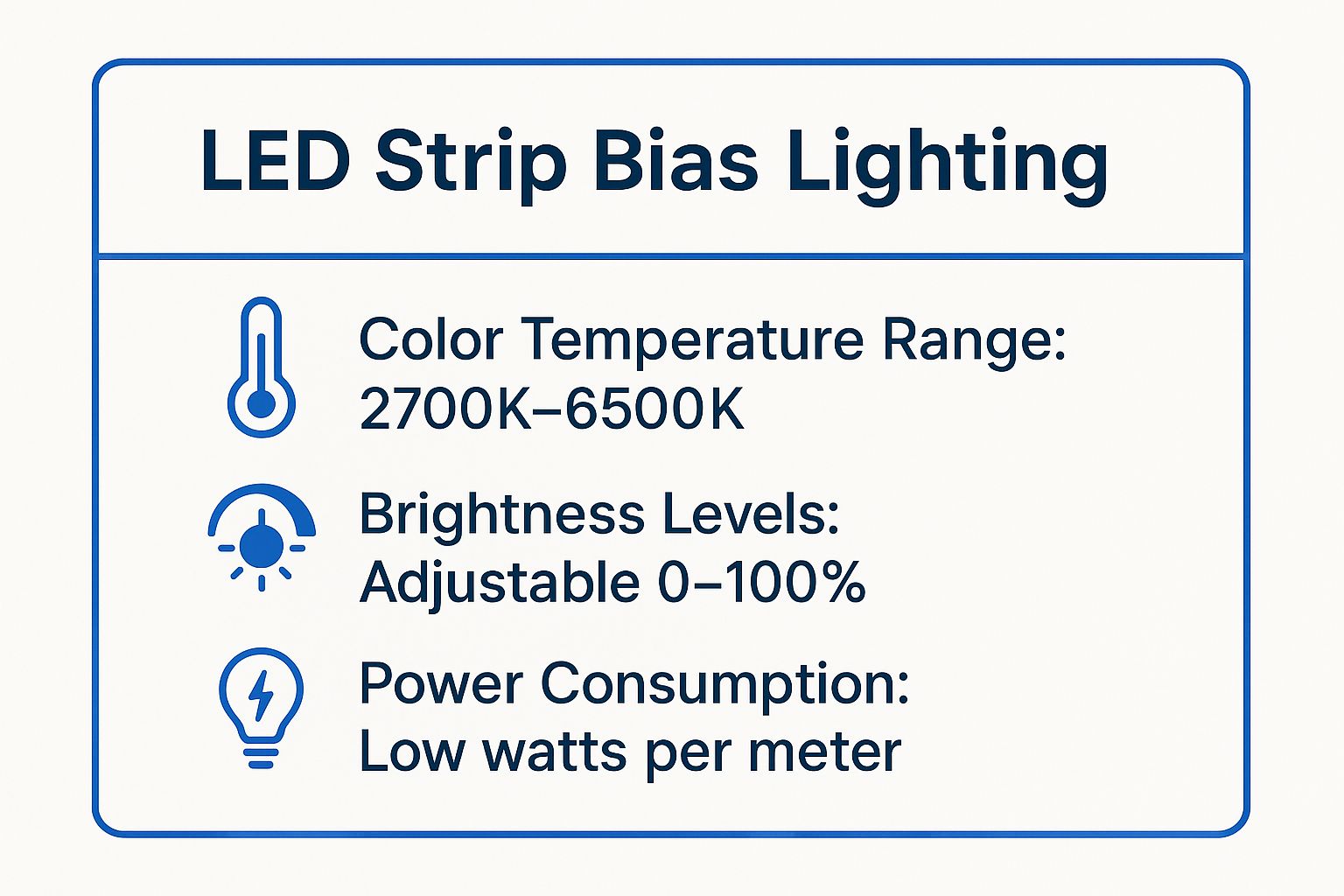
As the data shows, the best kits offer full adjustability in both color temperature and brightness, allowing you to fine tune the effect for your specific room and preferences while consuming very little power.
To see how bias lighting is installed and the dramatic difference it can make, this video provides a helpful visual guide.
2. Recessed Ceiling Lights with Dimmer Controls
For a clean, professional aesthetic that mimics a commercial cinema, strategically placed recessed ceiling lights are an essential component of any home theater lighting ideas. These fixtures, often called can or pot lights, are installed directly into the ceiling, providing broad, general illumination without cluttering the visual space. Their main advantage is the ability to offer bright, functional light for tasks like cleaning or guest seating, then dim down to a subtle, atmospheric glow when the movie starts.
How It Enhances Your Viewing Experience
Recessed lighting provides crucial ambient light that fills the room softly, preventing the stark, high contrast environment that causes eye strain. When paired with a quality dimmer system, such as those from Lutron Caseta, you gain complete control over the room’s atmosphere. You can smoothly transition the lighting from a bright welcome to a dark, cinematic environment, setting the perfect mood for an immersive viewing session. The key is to create a lighting scheme that supports the experience without ever distracting from it.
Implementation and Best Practices
Proper layout and selection are critical to avoid common pitfalls like screen glare or uneven lighting.
- Placement: Install fixtures primarily behind or to the sides of the seating area. Placing lights directly over or in front of the screen will create distracting reflections and wash out the image.
- Beam Angle: Opt for a narrower beam angle, between 15 and 30 degrees, to create focused pools of light on the floor or seating areas rather than a broad, flat wash. This technique, often used by professional designers, adds depth and visual interest.
- Zoning: Wire the lights into separate zones. For example, have a zone for the lights over the main seating and another for lights in the back of the room. This allows for flexible control, letting you keep a low light on for walkways during the film.
- Color Temperature: Choose a warm color temperature between 2700K and 3000K. This creates a cozy, inviting ambiance that feels more like a classic theater than a sterile office space.
3. Floor Path Lighting
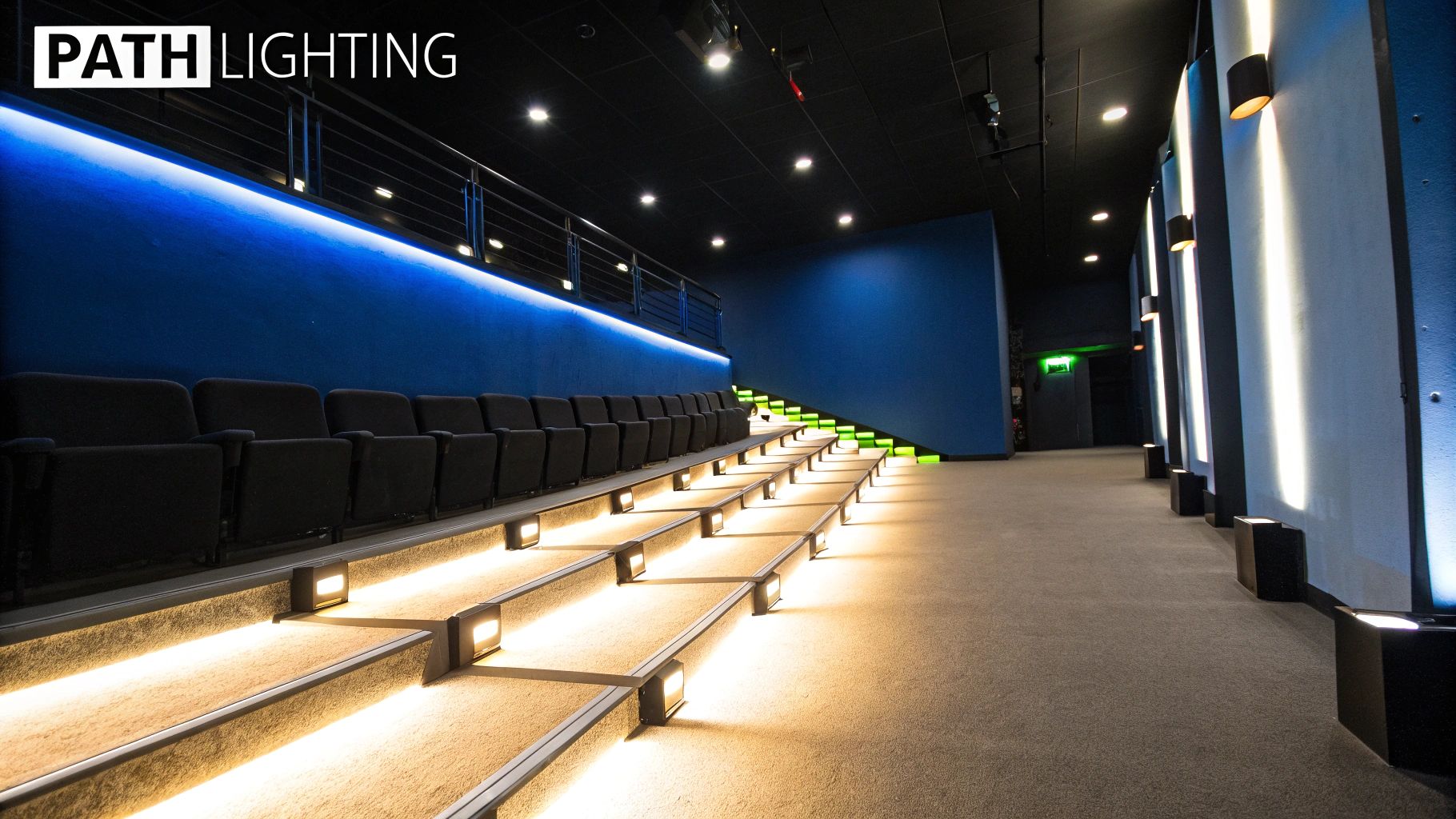
Inspired by commercial cinemas, floor path lighting is a home theater lighting idea that combines safety with sophisticated ambiance. This technique involves installing low level LED fixtures along aisles, steps, and room perimeters to guide movement in a dark room. The key is to provide just enough light for safe navigation without creating glare or distracting from the on screen action. This ensures guests can move around freely and safely, enhancing the overall convenience and professionalism of your home theater.
How It Enhances Your Viewing Experience
The primary function of floor path lighting is safety, preventing trips and falls in the dark. To preserve the immersive viewing environment, these systems often use warm amber or red LEDs. These colors have a minimal impact on your eyes’ dark adaptation, meaning they won’t ruin your night vision or wash out the screen’s contrast. By clearly defining walkways and steps, this lighting makes your home theater more accessible and user friendly, especially during movie marathons or social gatherings.
Implementation and Best Practices
Strategic placement and control are essential for effective floor path lighting that feels integrated, not intrusive.
- Placement: Install lights approximately 6 to 12 inches above the floor. Space fixtures consistently every 3 to 4 feet for even illumination along pathways.
- Automation: Connect the lights to motion sensors with a 30 second delay. This allows them to activate only when needed and turn off automatically.
- Control: Always include a manual override switch. This is crucial for cleaning, maintenance, or when you need the lights to remain on for extended periods.
4. Rope Lighting Under Seats
A sophisticated and practical addition to any dedicated media room, installing rope lighting under theater seats introduces a subtle, low level glow that enhances both safety and style. This technique creates a beautiful “floating” effect for your seating, making the recliners appear suspended above the floor. The soft illumination provides just enough light for guests to move around safely in a darkened room without creating distracting glare on the screen.
How It Enhances Your Viewing Experience
This form of ambient lighting defines the seating area and adds a layer of visual drama reminiscent of a commercial cinema. Unlike overhead lights, under seat lighting is indirect and positioned below your eye line, preventing it from interfering with screen visibility or causing reflections. It adds a premium, custom designed feel to the space while serving the practical purpose of pathway illumination, allowing you to find a dropped remote or navigate steps with ease.
Implementation and Best Practices
Achieving a clean, professional look is crucial for this home theater lighting idea.
- Concealment: Use aluminum channels with diffusers to mount the LED strips. This hides the individual diodes for a seamless line of light and protects the strip from damage.
- Brightness Control: Keep the intensity low. The goal is a gentle glow, not a primary light source. Using a dimmer is essential to fine tune the effect for different viewing scenarios.
- Secure Mounting: To prevent sagging over time, secure the rope light or LED strip every 12 to 18 inches using mounting clips or the channel’s adhesive backing.
- Smart Integration: Connect the lights to a smart controller like those offered by Savant or Control4. This allows you to program them into specific “movie night” scenes that dim automatically when you press play.
5. Wall Sconces with Indirect Illumination
For a classic, cinema style ambiance, wall sconces that provide indirect illumination are a superb home theater lighting idea. These decorative fixtures are mounted on the side walls and are designed to cast light upward toward the ceiling or back against the wall surface. This technique provides soft, diffuse ambient light throughout the room without creating direct glare on the screen or in the viewers’ eyes, combining functional lighting with a touch of architectural elegance.
How It Enhances Your Viewing Experience
Indirect lighting from sconces creates a comfortable, inviting atmosphere that mimics the feel of a commercial movie theater. By washing the walls with a gentle glow, they reduce the stark contrast between the screen and the surrounding darkness, which helps minimize eye fatigue during long viewing sessions. This approach adds a layer of sophisticated design, making the room feel more like a dedicated and polished entertainment space.
Implementation and Best Practices
Careful selection and placement are crucial to prevent the sconces from becoming a distraction.
- Placement: Install sconces on side walls, either level with or slightly behind the primary seating area, to keep them out of your direct line of sight to the screen.
- Light Direction: Choose fixtures specifically designed for uplighting or wall washing to ensure light spills away from the screen. Brands like Justice Design Group and Kichler offer excellent options.
- Control: Connect the sconces to their own dedicated dimmer circuit. This allows you to set the perfect low level glow for movie watching and raise the brightness for entry, exit, or intermission.
- Color Temperature: Use warm white bulbs (2700K to 3000K) to create a cozy, cinematic feel that won’t interfere with the on screen color accuracy.
6. Smart Color Changing LED Systems
For the ultimate in dynamic and immersive home theater lighting ideas, smart color changing LED systems offer unparalleled control and automation. These systems, like Philips Hue or Govee DreamView, use smart bulbs, lightstrips, and bars connected to a central hub or your Wi-Fi network. This allows you to create complex lighting scenes, sync lights with on screen content, and control everything from a smartphone app or voice assistant. They transform your room from a static space into an extension of the movie itself.
How It Enhances Your Viewing Experience
These systems elevate immersion by making the entire room react to the media you are watching. When a scene shifts to a warm, desert landscape, your room can be bathed in soft oranges and yellows. An underwater documentary can fill the space with cool blues and greens. This “surround lighting” effect breaks the boundary of the screen, pulling you deeper into the story and creating a truly unique and memorable atmosphere that static lighting simply cannot replicate.
Implementation and Best Practices
To get the most from these advanced systems, thoughtful setup is crucial.
- Start Simple: Begin by programming static scenes for different activities, like a “Movie Night” scene with dim, warm light or an “Intermission” scene with brighter, neutral light.
- Subtlety is Key: When using content syncing features, dial back the intensity and speed of the color changes. The goal is to create a complementary ambiance, not a distracting light show.
- Strategic Placement: Place smart bulbs in lamps and light bars behind furniture or plants to create indirect color washes on walls, avoiding direct glare.
- Strong Wi-Fi: These systems rely on a stable wireless connection. Ensure you have a strong Wi-Fi signal in your theater room to prevent lag or unresponsive lights during a crucial scene.
7. Acoustic Panel Integrated Lighting
For a truly integrated and professional look, one of the most sophisticated home theater lighting ideas involves combining illumination with acoustic treatment. This method embeds LED lighting systems directly into or behind sound absorbing panels. The result is a dual function design element that enhances both the room’s sound quality and its ambient atmosphere, all while maintaining a sleek, uncluttered aesthetic. By merging light and sound, you solve two critical home theater needs with a single, elegant solution.
How It Enhances Your Viewing Experience
This approach creates a soft, diffuse glow that emanates from the walls, contributing to a high end, cinematic feel without introducing reflective surfaces that could compromise sound quality. The light serves to accent the room’s architecture and the panels themselves, turning a functional necessity into a stunning design feature. This eliminates the need for separate light fixtures that might interfere with sound waves or create visual distractions, ensuring the focus remains on the screen.
Implementation and Best Practices
Careful planning is essential for a successful and safe installation that looks and performs perfectly.
- Heat Management: Always use low heat, high quality LED strips to prevent any risk of damage or fire to the acoustic materials.
- Electrical Planning: Ensure that all wiring and power sources are planned during the initial design and construction phase, ideally before the drywall is installed.
- Fabric Choice: Select acoustically transparent fabric that allows light to pass through evenly without creating hotspots or discoloration.
- Maintenance Access: Design the panels with discreet access points or make them easily removable to simplify any future maintenance or replacement of the LED components.
8. Starfield Ceiling Lighting
For the ultimate cinematic immersion, a starfield ceiling transforms your home theater into a breathtaking celestial escape. This dramatic lighting idea uses hundreds or even thousands of fiber optic strands or small LEDs embedded in the ceiling to replicate a clear night sky. The effect is profoundly atmospheric, creating a sense of infinite space and making the room feel larger and more magical, perfect for disappearing into your favorite film.
How It Enhances Your Viewing Experience
A starfield ceiling adds a layer of visual wonder without creating distracting glare or reflections on the screen. The subtle, pinpoint lights are just bright enough to add ambiance while keeping the room dark for optimal picture quality. This unique home theater lighting idea is less about practical illumination and more about creating an unforgettable environment that elevates movie night from a simple activity to a genuine event. Some advanced systems can even create twinkling effects or simulate constellations.
Implementation and Best Practices
Achieving a realistic starfield effect requires careful planning, and it is often best integrated during the construction or major renovation phase.
- Star Placement: For maximum realism, use astronomical charts to map out actual constellations. Random placement can also look beautiful, but a planned layout adds a sophisticated touch.
- Dimming Control: A high quality dimmer is essential. This allows you to adjust the brightness from a subtle twinkle to a more prominent display, or turn it off completely for certain viewing situations.
- System Type: Fiber optic kits are a popular choice as they house a single light source (the “illuminator”) in an accessible location, making maintenance easier than with individual LEDs.
- Professional Installation: Due to the complexity of drilling and threading hundreds of points of light, professional installation is highly recommended to ensure a clean, flawless finish.
9. Perimeter Cove Lighting
For a truly integrated and sophisticated aesthetic, perimeter cove lighting is one of the most elegant home theater lighting ideas available. This architectural technique involves installing LED strips within a recess, or “cove,” built into the ceiling or crown molding around the room’s perimeter. The light is directed upwards and outwards, reflecting off the ceiling and walls to create a soft, even, and completely indirect ambient glow that fills the space without any harsh glare or visible bulbs. This method makes the room feel larger and more open while providing a luxurious, high end finish.
How It Enhances Your Viewing Experience
Cove lighting provides perfectly diffused, nond istracting ambient light that sets a comfortable viewing baseline. By eliminating direct light sources from your line of sight, it prevents screen reflections and eye fatigue, allowing you to focus entirely on the film. The seamless, built in look elevates the room from a simple media space to a dedicated, custom designed cinema. It provides functional illumination for moving around the room while maintaining an immersive, theatrical atmosphere that feels both professional and inviting.
Implementation and Best Practices
Achieving a professional result with cove lighting requires careful planning, ideally during the design or construction phase.
- Architectural Integration: Plan for the cove structure when designing crown molding, coffered ceilings, or custom soffits. Ensure there is enough space to hide the LED strips and their wiring completely.
- Consistent Illumination: Use high density LED strips and aluminum channels with diffusers to prevent “spotting” and create a smooth, continuous line of light.
- Smart Dimming: Incorporate a high quality dimmer to adjust the brightness perfectly for movie watching, socializing, or general room use. Consider “warm dim” LEDs that transition to a warmer color temperature as they are dimmed for a cozier feel.
- Maintenance Access: Design the cove with a removable panel or easy access point to simplify maintenance or replacement of the LED strips in the future.
10. Starry Sky Ceiling Panels
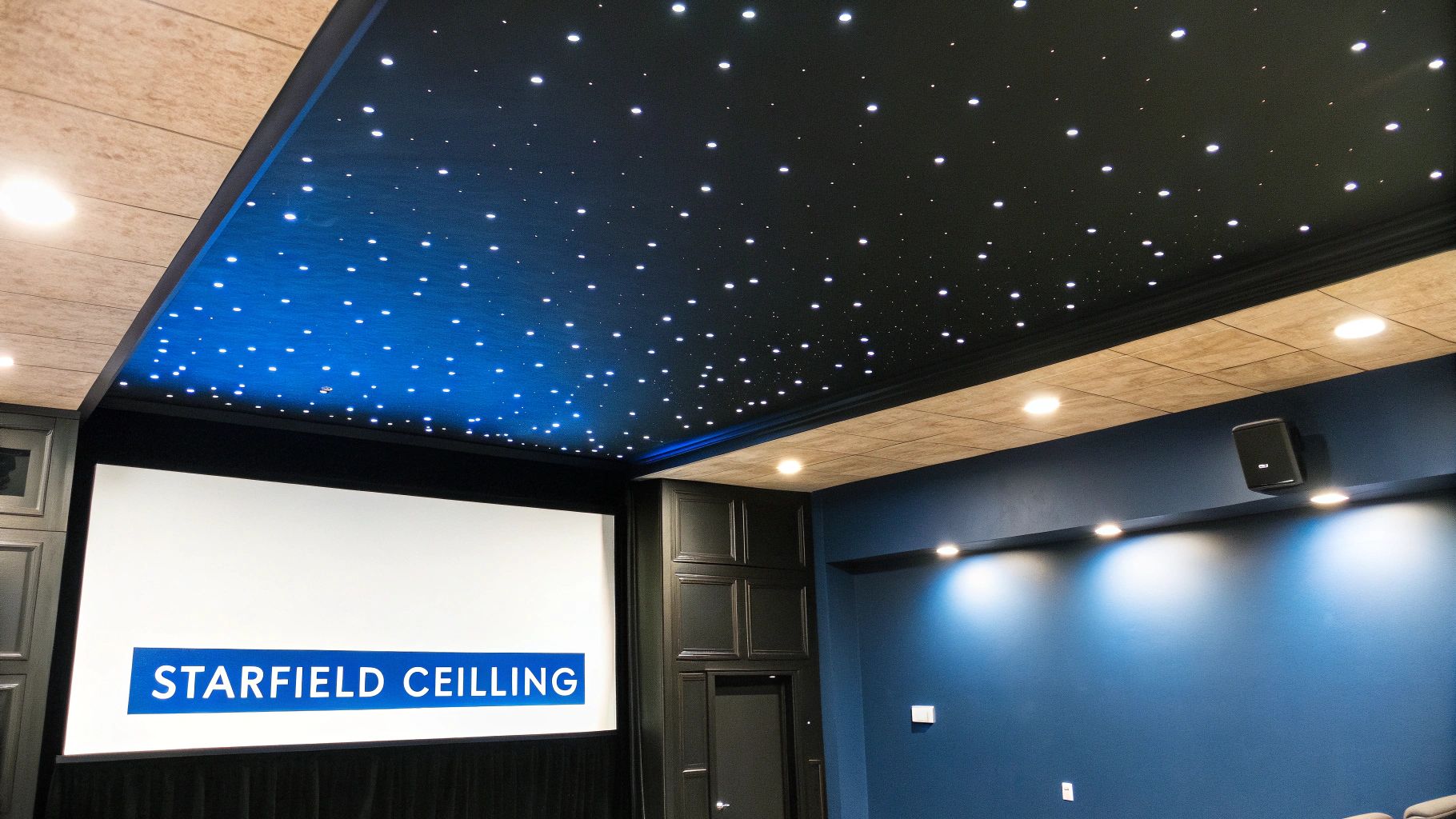
Transform your home theater into a celestial wonderland with starry sky ceiling panels. This advanced lighting technique involves installing fiber optic or LED lights into ceiling panels, often made of acoustic absorbing material, to replicate the breathtaking effect of a star filled night sky. It’s a premium feature that adds an unparalleled level of immersion and awe, making every movie night feel like a special event at a high end cinema.
How It Enhances Your Viewing Experience
The subtle, low level light from a star ceiling provides just enough ambient illumination to navigate the room without causing screen glare or reflections. The effect is purely atmospheric, creating a sense of depth and openness that makes a small room feel larger and more magical. For a truly captivating experience, some systems offer “twinkle” effects or even shooting star animations, which can be programmed to create a dynamic and mesmerizing canopy above you.
Implementation and Best Practices
Achieving a professional looking star ceiling requires careful planning and installation.
- Light Source: Fiber optic systems use a single light engine (illuminator) that feeds light through hundreds of individual strands, allowing for easy maintenance and color changing effects. LED systems embed individual lights into the panels.
- Density and Layout: For a realistic look, vary the diameter of the fiber optic strands and create a random, non uniform pattern. A typical density is 3 to 6 stars per square foot.
- Acoustic Benefits: Choose panels made from sound absorbing materials. This dual purpose design not only looks incredible but also helps improve your room’s acoustics by taming echoes and reverberations.
Top 10 Home Theater Lighting Ideas Comparison
| Lighting Type | Implementation Complexity | Resource Requirements | Expected Outcomes | Ideal Use Cases | Key Advantages |
|---|---|---|---|---|---|
| LED Strip Bias Lighting | Low | Low power, adhesive backing | Reduces eye strain, enhances contrast | Behind TV/screens, ambient bias | Energy efficient, easy installation |
| Recessed Ceiling Lights w/ Dimmer | Medium | Ceiling access, LED fixtures | Even ambient light, dimmable | General room lighting, pre show | Clean look, glare reduction |
| Floor Path Lighting | Medium | Floor modification, LEDs | Safe navigation, preserves night vision | Aisles, steps safety lighting | Enhances safety, motion sensor options |
| Rope Lighting Under Seats | Low | Flexible LED ropes, clips | Subtle ambient glow, floating effect | Under theater seats, mood lighting | Flexible routing, color changing |
| Wall Sconces with Indirect Lighting | Medium | Electrical wiring, fixtures | Soft, indirect ambient light | Side walls, architectural interest | Decorative, complements room design |
| Smart Color Changing LED Systems | High | Smart LEDs, Wi-Fi, controllers | Dynamic, immersive lighting scenes | Content sync, mood lighting | Highly customizable, smart control |
| Acoustic Panel Integrated Lighting | High | Custom panels, LED strips | Combined sound absorption & ambient light | Acoustic treatment + lighting | Dual functionality, clean integration |
| Starfield Ceiling Lighting | High | Fiber optics/LEDs, complex wiring | Immersive starry sky effect | Ceiling feature, dramatic effect | Unique ambiance, visual impact |
| Perimeter Cove Lighting | High | Architectural cove build, LEDs | Even indirect ambient illumination | Room perimeter, architectural enhancement | Hidden lighting, shadow free |
Bringing Your Vision to Light with Professional Expertise
Crafting the perfect home theater is an art form, and as we’ve explored, lighting is your most powerful tool. It’s the final layer that transforms a room with a big screen into a truly immersive cinematic sanctuary. By thoughtfully combining various home theater lighting ideas, you move beyond simple illumination and begin to sculpt an experience. You are no longer just watching a movie; you are living within its world.
The key to a professional grade setup lies in layering. Imagine the practical brilliance of dimmable recessed lights guiding you to your seat, paired with the subtle, atmospheric glow of perimeter cove lighting. Add the modern flair of LED backlighting behind your screen to reduce eye strain and the dramatic touch of uplighting on movie posters, and the room suddenly gains depth, character, and sophistication. Each element, from floor path lights to a dazzling starfield ceiling, serves a specific purpose, contributing to a cohesive and versatile environment.
From Inspiration to Implementation
The journey from inspiration to a fully realized home theater can seem daunting. While individual components like LED strips may seem like simple DIY projects, creating an integrated, seamless system often requires a deeper level of technical skill. Achieving that polished look involves more than just plugging in lights; it demands strategic planning, precise wiring, and often, integration with a central smart home control system like Savant or Control4.
This is where the value of professional expertise becomes undeniable. An expert can help you:
- Design a Cohesive Plan: Ensure all your chosen lighting elements work together harmoniously.
- Manage Complex Wiring: Safely run wires through walls and ceilings for a clean, hidden installation.
- Integrate Smart Controls: Program your lighting to work with a single remote, voice command, or automated scenes (“Movie Time,” “Intermission,” “Clean Up”).
- Optimize Placement: Position fixtures for maximum impact without causing screen glare or unwanted reflections.
For homeowners and businesses in Houston, turning these sophisticated home theater lighting ideas into a flawless reality is where a professional service makes all the difference. Investing in expert installation not only guarantees a stunning visual result but also ensures the safety, reliability, and longevity of your entire system. You’ve invested in the screen, the speakers, and the seating; completing the vision with expertly installed lighting is the final step to creating a space that will provide countless hours of cinematic joy for years to come.
Ready to build the home theater of your dreams? The experts at TV Mounting Houston specialize in more than just screen installation; they provide comprehensive home theater solutions, including custom lighting design and smart home automation. Visit TV Mounting Houston to schedule a consultation and bring your ultimate cinematic vision to life.


